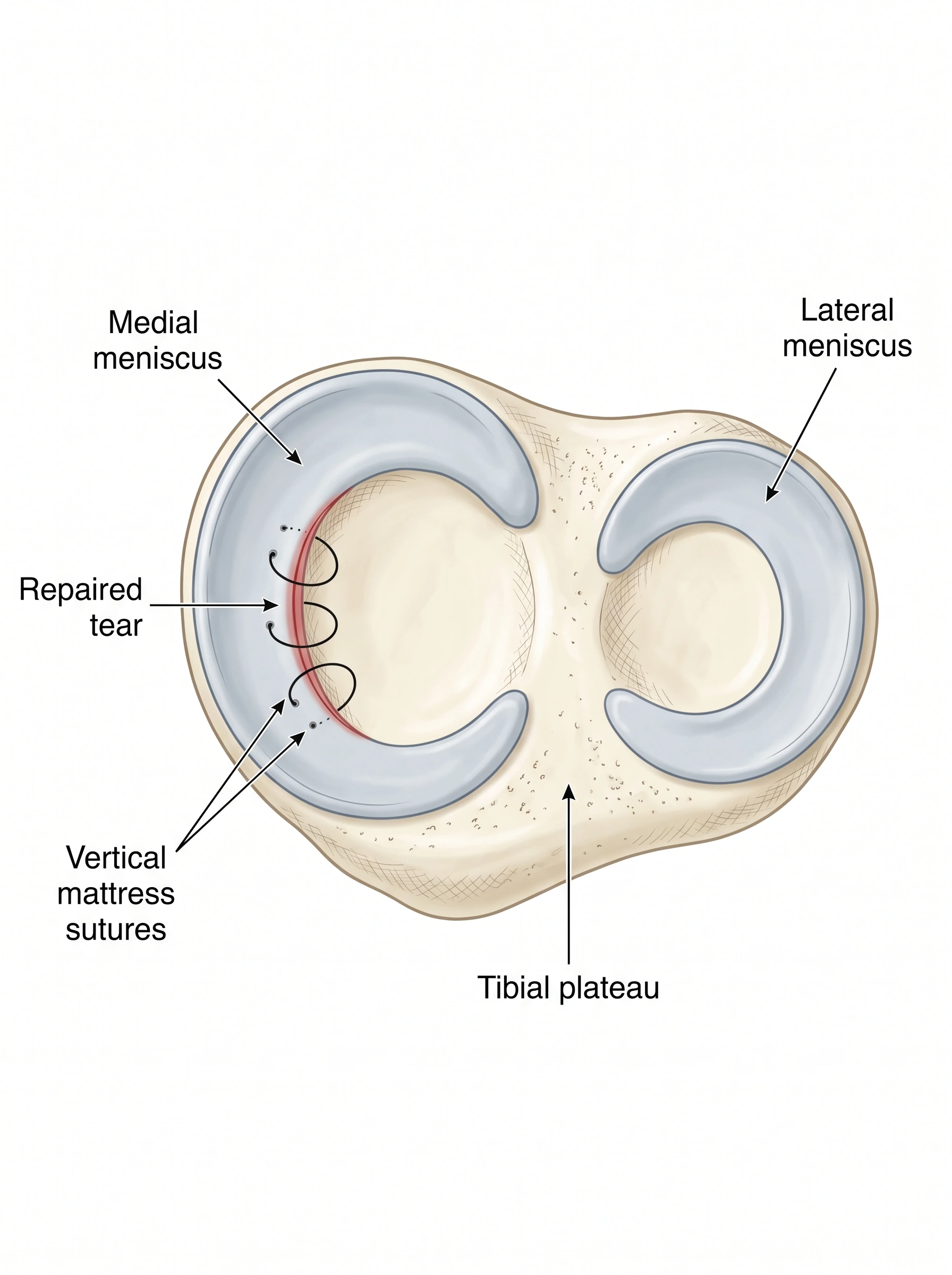
Dr. Vidal performs meniscus repair in Vail, stitching a torn meniscus so it can heal and preserving the cushion in the knee. It is chosen for suitable tears after non-surgical care, and Dr. Vidal explains when repair or trimming fits the tear's location and pattern.
Armando Vidal performs meniscus repair in Vail when it is the right step, and reviews every alternative with you first.
What do patients ask most?
Why repair a meniscus instead of removing the torn part?+
Which tears can be repaired?+
Is recovery longer after a repair than a trimming?+
Can a repaired meniscus tear again?+
Who performs meniscus repair in Vail?
Armando Vidal is a board certified orthopedic surgeon who performs meniscus repair in Vail, CO. Fellowship trained at University of Pittsburgh Medical Center. Dr. Vidal sees patients at the practice in Vail; appointments can be requested through this site.
What is Meniscus Repair?
Meniscus repair uses stitches to bring the edges of a torn meniscus back together so the tissue can heal.
The meniscus is the C-shaped cartilage that cushions and stabilizes the knee.
Repair is preferred over trimming when the tear is in a part of the meniscus with enough blood supply to heal, usually the outer rim. Keeping more meniscus helps protect the knee over the long term.
Not every tear can be repaired. Tears in the inner part have little blood supply, and those are more often trimmed. The choice is guided by the tear's location, pattern, and the patient's age and activity.
What happens during Meniscus Repair, step by step?
Repair is done with arthroscopy, a small camera through tiny incisions.
The surgeon places sutures across the tear to hold the edges together while the tissue heals. If the tear is in a region that cannot heal, the surgeon trims the damaged part instead. Dr. Vidal will explain what was found and done.
What is recovery like after Meniscus Repair?
Repair requires a more protected recovery than trimming because the stitched tissue needs time to heal.
Many people use a brace and limit deep bending and full weight for a period of weeks, with a gradual return to activity over several months, according to general guidance from the American Academy of Orthopaedic Surgeons. These are ranges, not promises. Your surgical team will set the specific restrictions for your repair.
Read the full guide to preparing for surgery →
Your own recovery instructions come from the office and are specific to you. This page describes the general course, not a plan to follow.
How do payments work?
Contact the office to confirm insurance participation.
Fellowship trained at University of Pittsburgh Medical Center. Sees patients in Vail.
About Dr. Vidal →